Classroom Laminating Machine Guide for Teachers
A practical guide to choosing a teacher-friendly laminator for reusable worksheets, flashcards, task cards, center labels, posters, classroom signs, and everyday school prep.
If you are comparing specific models, LeStallion’s guide to the best laminating machine for teachers is a useful companion to this classroom-focused buying framework.
Why classroom laminating is different from office laminating
A teacher does not use a laminator the same way an office team does. In a classroom, the machine has to support fast preparation, repeated student handling, limited storage space, and a wide variety of printed materials. One day it may protect phonics flashcards; the next day it may seal math task cards, center direction signs, desk labels, behavior visuals, or dry-erase practice mats.
That variety changes the buying decision. The best classroom laminating machine is not simply the biggest or fastest option. It is the one that seals consistently, handles common pouch thicknesses, fits the teacher’s prep area, warms up without wasting a planning period, and includes a sensible way to release jams. For teachers, reliability matters more than flashy features.
It also helps to understand the broader idea of lamination: a printed sheet is protected between layers of film, usually with heat and pressure. In school settings, that protection turns fragile paper into materials that can survive student hands, dry-erase markers, storage bins, and repeated lessons.
Core features teachers should compare
Look for support for common 3 mil and 5 mil pouches. These cover most classroom worksheets, cards, labels, and signs.
Fast warm-up helps during planning periods, but even heat is more important than speed alone.
Letter-size support is enough for many classrooms. Wider machines help with charts, posters, and larger signs.
A release lever or reverse function is valuable when small classroom pieces shift inside a pouch.
Best classroom materials to laminate first
Teachers get the best value by laminating materials that students handle repeatedly. Start with high-use pieces rather than one-time handouts. Good candidates include flashcards, task cards, vocabulary cards, number lines, ten-frame mats, center labels, desk tags, visual schedules, small anchor charts, and sorting activities.
For literacy centers, laminated sound boxes, word-building mats, sight-word cards, and sentence frames can be used with dry-erase markers. For math, teachers often laminate place-value charts, graph templates, fraction strips, counting mats, and fact-practice boards. For classroom management, laminated job cards, rotation signs, table labels, and routine visuals can stay neat for the whole term.
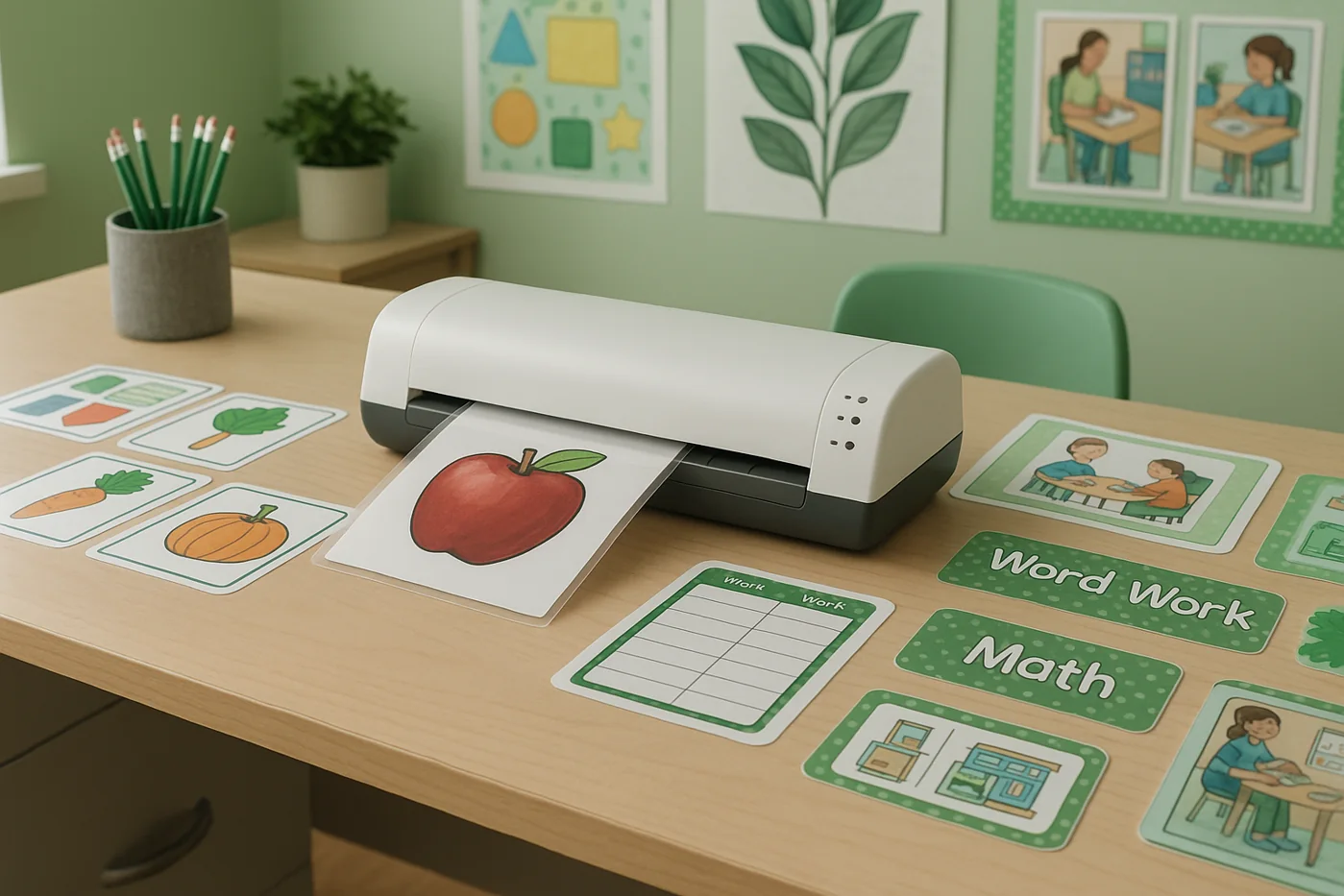
A flashcard set is a useful example. If cards are printed, trimmed, laminated with a clear sealed border, and stored on a binder ring or in a labeled pouch, the same set can serve small groups, centers, intervention, review games, and tutoring sessions.
When not to laminate
Strong SEO pages should still give practical, balanced advice. Not every paper deserves a pouch. Avoid laminating worksheets that students must cut, glue, fold, turn in, annotate heavily, or take home. Also avoid laminating temporary decorations that will be used briefly and then discarded. Lamination costs time and supplies, so the best teacher workflow is selective.
Reusable worksheets are a better fit. A writing practice mat, phonics blending board, daily number page, map-labeling page, or math response template can be used again and again. A one-time comprehension worksheet is usually better left unlaminated.
Pouch thickness: 3 mil, 5 mil, and classroom durability
Most classroom prep falls into two categories. A 3 mil pouch is flexible, affordable, and good for full-page worksheets, directions, reference pages, and signs that will be stored in folders or bins. A 5 mil pouch feels sturdier and works well for cards, labels, visual supports, and materials that younger students pick up repeatedly.
Thicker pouches can be useful, but only if the machine supports them. A laminator that is forced to run incompatible pouches may produce cloudy seals, wrinkles, or jams. Teachers should check the manual before buying bulk supplies, especially when planning large classroom sets.
Safety and classroom setup
A thermal laminator uses heat, so it should be treated as an adult-only classroom tool. Students can help sort papers before the machine is plugged in or stack cooled pieces after trimming, but they should not feed pouches, pull warm sheets, touch the exit slot, or handle jams.
Set the laminator on a flat, stable surface with room at the front and back. Keep the cord away from student traffic, separate paper stacks from the hot area, and let finished pages cool flat before cutting. These simple routines make the machine safer and also improve results because cooled sheets curl less and trim more cleanly.
Buying framework for teachers
Before buying, list the materials you actually make. A teacher who mostly laminates letter-size worksheets and small labels may not need a wide machine. A teacher who creates posters, classroom displays, and large visual schedules may want a wider inlet. A teacher who laminates hundreds of task cards should prioritize jam release, consistent heat, and comfortable trimming workflow.
For product-level comparisons and teacher-oriented picks, use this teacher laminator comparison guide after deciding which features matter for your classroom. That order is important: feature needs first, model comparison second.
Maintenance and storage
A classroom laminator stays useful when it is stored flat, kept dust-free, and paired with clean pouches. Store pouches flat in their original packaging or in a labeled drawer. Keep different thicknesses separate so volunteers, aides, or substitute teachers do not accidentally use the wrong supply.
Good storage also protects the finished materials. Laminated cards should be grouped by skill or unit, not left loose in a drawer. Use zipper pouches, photo boxes, binder rings, or labeled envelopes so the set is still useful months later. For reusable worksheets, flat folders or center bins keep pages from curling. For posters and large signs, avoid folding; store them flat when possible or loosely rolled with a label.
Teachers can also create a small laminating station: pouches, scissors, a paper cutter, a corner rounder, dry-erase marker, cloth eraser, and a folder for items waiting to be laminated. This simple setup turns laminating from a rushed chore into a repeatable prep routine.
After each batch, let the machine cool before storing it. Do not wrap the cord tightly around a hot unit. If a pouch jams, use the manufacturer’s release instructions instead of pulling hard. These habits protect the machine and reduce wasted materials.
Related classroom prep entities
This topic connects naturally with classroom routines, teacher planning, and reusable learning materials. The role of a teacher involves not only instruction but also preparing durable resources for repeated practice. A classroom is a high-handling environment, so paper materials need more protection than they would in a quiet office drawer.
FAQ
What size laminator works best for teachers?
Most teachers do well with a compact pouch laminator that handles letter-size pages and common classroom pouches. If posters, anchor charts, or wide displays are common, check the maximum inlet width before buying.
Are 3 mil or 5 mil pouches better for classroom materials?
Use 3 mil pouches for flexible worksheets and directions. Use 5 mil pouches for flashcards, task cards, labels, and pieces students handle repeatedly.
Should teachers laminate every worksheet?
No. Laminate reusable materials, center pieces, reference mats, and items handled often. One-time pages, take-home papers, and assessment sheets usually do not need lamination.
Can laminated worksheets be used with dry-erase markers?
Yes, many laminated worksheets work well with dry-erase markers, but test one pouch surface first. Some markers erase cleaner than others.
What safety rules matter most in a classroom?
Keep the laminator as an adult-only tool, use it on a stable surface, keep the cord out of student traffic, let pages cool flat, and follow the manufacturer’s jam-release instructions.
How should teachers store laminated classroom sets?
Store sets in labeled zipper pouches, photo boxes, binder rings, folders, or center bins. Include an inventory card for card sets so missing pieces are easy to spot.
Editorial review note
Classroom Prep Guides uses a practical editorial checklist for teacher-facing pages: classroom use case, pouch compatibility, safety, durability, storage, maintenance, and clarity. The reviewer profile is an editorial standard for this guide and does not imply a real named credentialed person.